
In the world of heavy manufacturing, off-the-shelf components rarely meet the rigorous demands of critical machinery. When you need a 20-ton propeller shaft for a ship or a massive high-pressure vessel block, custom open die forging is the only viable manufacturing method.
Unlike standard casting or machining from bar stock, open die forging (also known as free forging) offers unparalleled structural integrity and design flexibility. Whether you require massive seamless rolled rings or complex shaped shafts, this process ensures your components can withstand extreme stress, fatigue, and temperature.
What is Custom Open Die Forging?
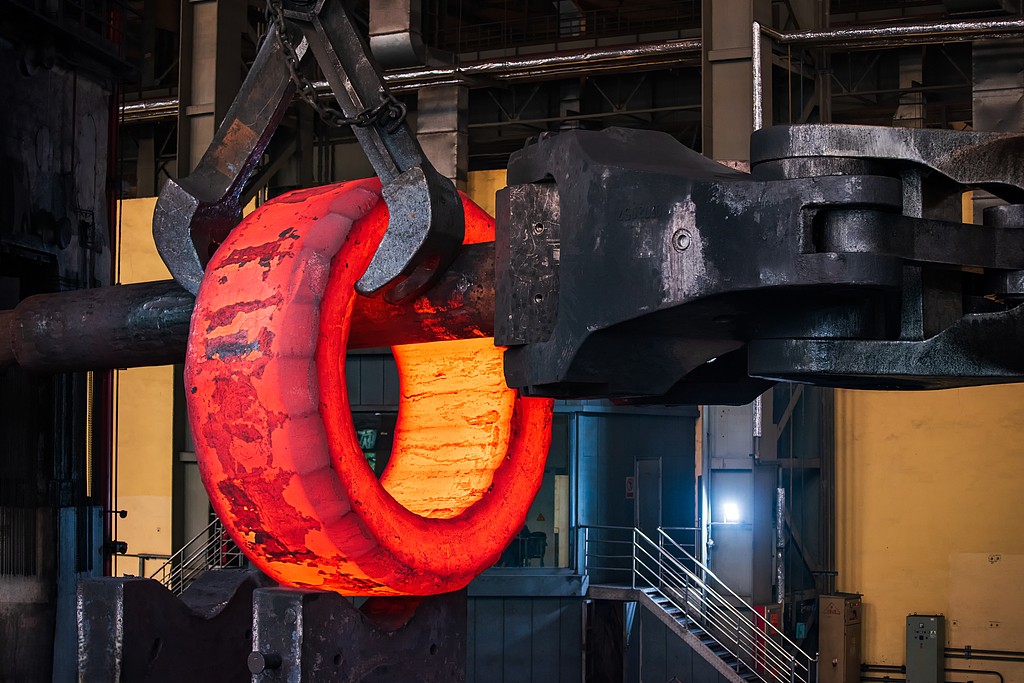
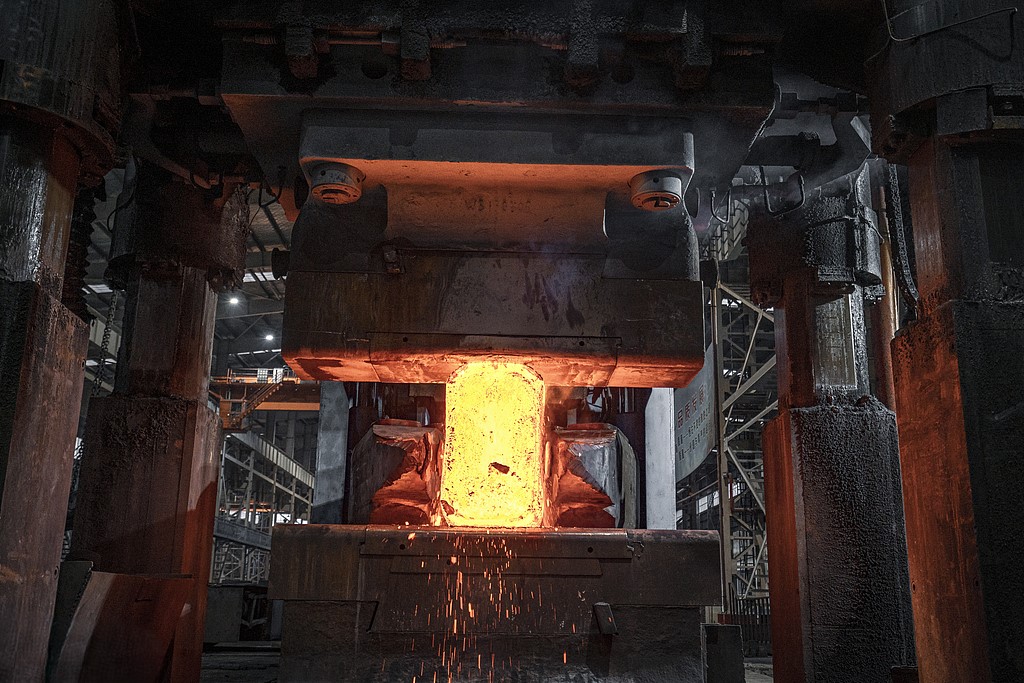
Custom open die forging is a metalworking process where a hammer or hydraulic press deforms a piece of metal between flat or simple-shaped dies. Unlike closed die forging, the metal is not fully enclosed, allowing it to move laterally.
This “open” nature is its greatest strength. It allows skilled operators to manipulate the workpiece to create custom shapes and massive sizes that would be impossible (or too expensive) to produce with fixed molds. It is the preferred method for single-piece prototypes or low-volume, heavy-duty production runs.
The Synergy: Open Die and Seamless Rolled Rings
For buyers sourcing large circular components, it is crucial to understand how open die forging intersects with seamless rolled ring forging.
- Pre-Forming for Rings: Every seamless rolled ring starts as an open die forging. A raw ingot is “upset” (compressed) and “pierced” (punched) on an open die press to create the initial donut shape before it goes to the ring rolling mill.
- Mandrel Forging (For Extra Large Rings): When a ring is too thick or too tall for a standard ring rolling mill, we use custom open die forging with a mandrel. This allows us to forge massive rings and heavy wall cylinders that exceed the capacity of rolling machines.
Key Advantages of the Open Die Process
Why do engineers specify custom open die forging for their most critical parts?
- Superior Grain Flow: The compressive force of the press aligns the metal’s grain structure to the shape of the part. This continuous grain flow significantly increases fatigue strength and impact resistance.
- Internal Soundness: The process closes internal voids and porosity common in castings. We guarantee this through 100% Ultrasonic Testing (UT).
- Cost-Effective Customization: Since it uses simple, flat dies, there is no need to invest thousands of dollars in custom molds. This makes it ideal for custom sizes and short lead times.
Our Custom Forging Capabilities
We specialize in manufacturing heavy forgings tailored to your blueprints.
1. Heavy Shafts & Spindles
We forge stepped shafts, rotor shafts, and eccentric shafts used in power generation and marine propulsion.
2. Forged Blocks & Rectangles
Used for fluid ends, valve bodies, and die blocks. We forge on all six sides to ensure a consolidated center.
3. Discs & Hubs
Solid forged discs for gear blanks, tube sheets, and blind flanges.
[Heavy Forging Product Gallery]
Material Versatility
A key benefit of custom open die forging is the ability to work with a vast array of materials. We stock and forge:
- Carbon Steel: SA105, A350 LF2.
- Alloy Steel: 42CrMo4 (4140), 18CrNiMo7-6 (1.6587) for gears, 34CrNiMo6 (4340).
- Stainless Steel: 304, 316L, and Duplex F51 for corrosion resistance.
- Tool Steel: H13, D2 for industrial tooling.
Industries We Serve
- Wind Energy: Main shafts and large gear rings.
- Mining & Excavation: Heavy duty axles and crusher shafts.
- Oil & Gas: High-pressure valve blocks and subsea connectors.
- Metal Processing: Rolls for steel mills.
Conclusion
Custom open die forging is the backbone of heavy industry. It combines the flexibility to create unique shapes with the metallurgical strength required for safety-critical applications. Whether you need a pre-form for a rolled ring or a finished machined shaft, our facility has the tonnage and expertise to deliver.
Ready to source high-quality custom forgings? Contact our engineering team today for a quote on your specific requirements.
Metallurgy of Forged Stepped Shafts: Optimizing Heat Treatment and Hardness Gradient for Heavy-Duty Performance
In the engineering of high-capacity transmission systems—ranging from multi-megawatt wind turbine main shafts to heavy-duty…
Manufacturing Engineering of Forged Stepped Shafts: Optimizing Grain Flow for Heavy-Duty Transmission
In the design of high-torque transmission systems—ranging from industrial gear reducers(For complete gearbox assemblies, we…
Advanced Gear Blank Manufacturing: Why Seamless Forging Outperforms Casting for Heavy-Duty Power Transmission
In the demanding sectors of offshore wind energy, deep-pit mining, and maritime propulsion, the gear…
Seamless Rolled Ring Forging vs. Casting & Welding: The Ultimate Guide for Heavy Industry
In the demanding sectors of wind energy, aerospace, and heavy industrial manufacturing, the structural integrity…
Open Die Forging vs. Closed Die Forging for Large-Scale Forged Shafts: A Technical Comparison for Engineers
In the realm of heavy machinery, the structural integrity of a power-transmitting component is non-negotiable….
Forged Gear Rings: The Seamless Solution for High-Performance Gear Blanks
For procurement managers and engineers in the heavy machinery sector, the reliability of a gear…