
In the realm of heavy machinery, the structural integrity of a power-transmitting component is non-negotiable. For engineers and procurement specialists, the decision between open die forging and closed die forging for large-scale forged shafts is a pivot point that dictates not only the initial industrial shaft forging cost but also the long-term fatigue life of the equipment.
Selecting the optimal forging process comparison requires a deep understanding of metallurgical transformation and mechanical constraints. While both processes utilize heat and pressure to shape metal, their applications for heavy duty forged steel shafts differ significantly based on geometry, volume, and required precision.
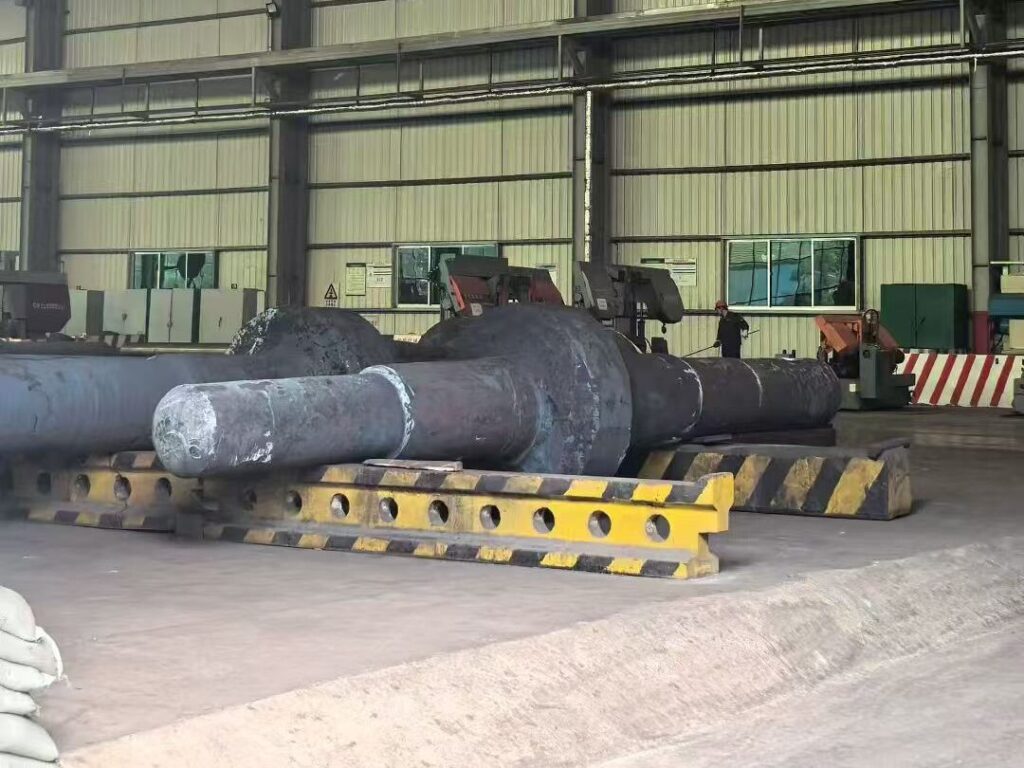
1. The Executive Summary: Choosing the Right Forging Process
For large-scale forged shafts, the “Answer-First” approach is clear: Open die forging is the industry standard for massive, low-to-medium volume shafts where structural homogeneity is paramount. Closed die forging (or impression die forging) is reserved for smaller to medium-sized shafts produced in high volumes where “near-net shape” accuracy justifies the high upfront tooling investment.
As a forging manufacturer for large shafts, we often see that the difference between open and closed die comes down to the “Envelope of Feasibility.” If your shaft exceeds 5 meters in length or 10 tons in weight, open die is likely your only viable path. Conversely, for standardized gear shafts under 500kg, closed die offers superior economic efficiency.
2. Understanding the Mechanics: Process Overview
Open Die Forging: The Art of Controlled Deformation
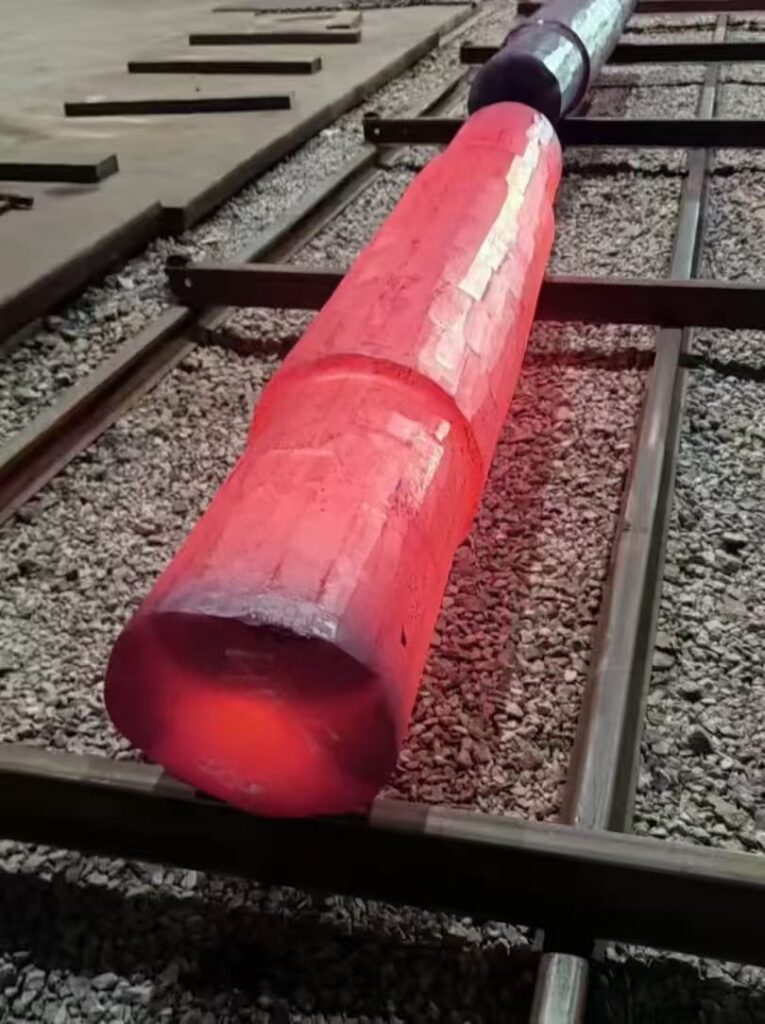
Often referred to as “smith forging,” open die forging involves placing a heated workpiece between multiple dies that do not completely enclose the metal. The material is “drawn out” or “cogged” through repeated strikes or hydraulic pressure.
This process allows for immense flexibility. Because the metal is not confined, the operator can manipulate the ingot into complex stepped shafts or long cylinders. For large-scale forged shafts, this method is essential for achieving the necessary reduction ratios required to break down the as-cast dendritic structure of the initial ingot.
Closed Die Forging: Precision through Confinement
Closed die forging utilizes precision-machined molds to produce a specific shape. The heated metal is placed in a bottom die, and a top die strikes the workpiece, forcing the metal to flow into the die cavities.
The primary limitation here is scale. The hydraulic press capacity required to force metal into a closed cavity increases exponentially with the surface area of the part. Furthermore, the cost of producing these dies for a 10-meter shaft would be prohibitive, making this process more suitable for smaller, high-precision components.
3. Key Comparison Factors for Large-Scale Shafts
Size and Weight Capacity
When discussing forged shaft manufacturing, size is the ultimate gatekeeper. Open die presses can handle ingots weighing upwards of 200 tons. This is the only method capable of producing the massive propulsion shafts used in container ships or the main shafts for multi-megawatt wind turbines.
Closed die forging is typically capped by the physical dimensions of the die blocks and the tonnage of the press. While “large” closed die forgings exist, they rarely compete with the sheer scale of open die “heavy-duty” components.
Metal Grain Flow in Forging
One of the most critical technical advantages of forging over casting or machining from bar stock is metal grain flow in forging. In open die forging, the grain flow is oriented longitudinally along the axis of the shaft.
As the metal is elongated, the grain structure aligns with the direction of the deformation. This alignment is crucial for shafts subjected to high torsional and bending stresses. By ensuring the grain flow is parallel to the principal stresses, we maximize the impact strength and fatigue resistance of the material—a vital factor for heavy duty forged steel shafts.
Dimensional Accuracy and Machining
Closed die forging produces a “near-net shape,” meaning the part is very close to its final dimensions, requiring minimal finishing. Open die forging, however, produces a “rough-to-shape” component.
Engineers must account for a “machining allowance” in open die forgings. While this adds a step in the manufacturing cycle, it allows for the removal of surface decarburization and potential surface cooling cracks, ensuring the final product is metallurgically sound.
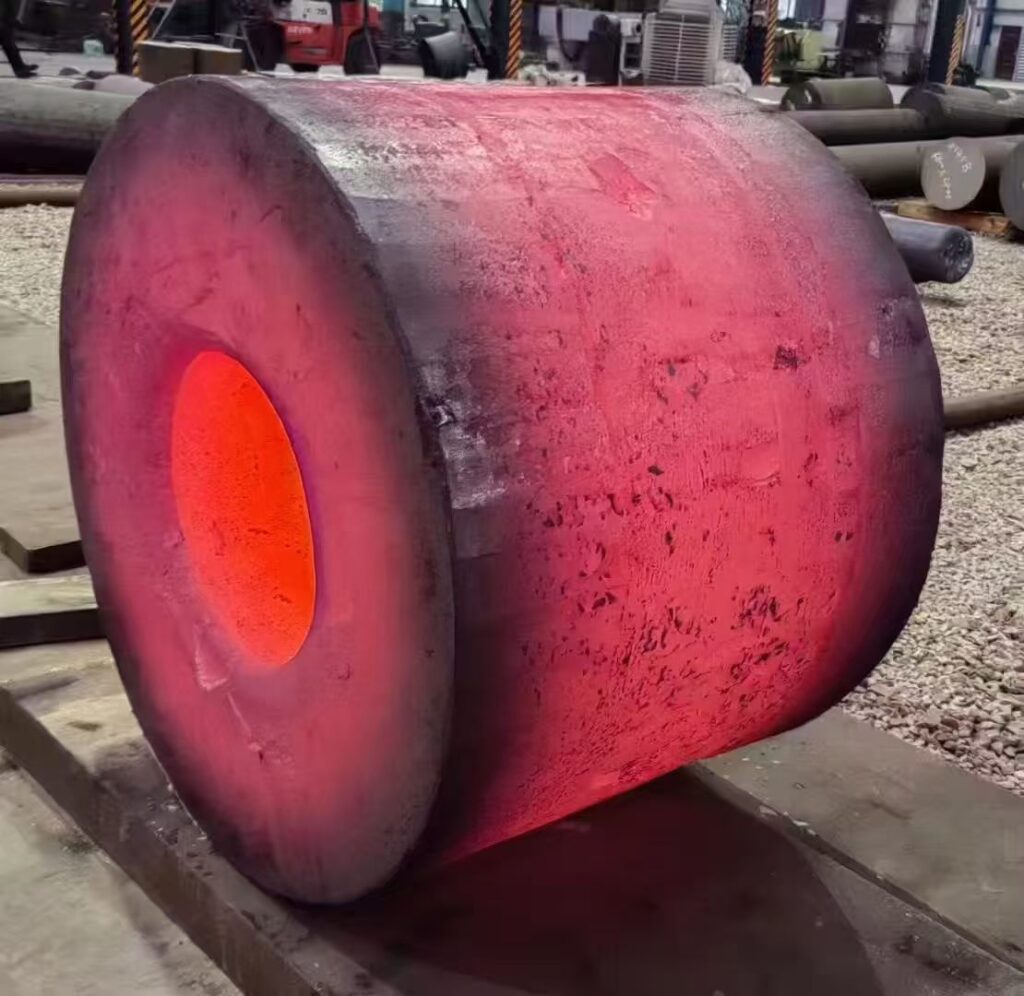
4. Material Utilization and Cost Analysis
Industrial Shaft Forging Cost: Tooling vs. Unit Price
The industrial shaft forging cost is a balance of CAPEX and OPEX.
- Open Die: Low tooling cost (standard flat or V-dies) but higher labor and machining costs.
- Closed Die: Extremely high tooling costs (custom dies can cost tens of thousands of dollars) but lower per-unit costs at high volumes.
Economic Order Quantity (EOQ)
For a custom large-scale forged shaft, the EOQ for closed die forging is rarely met. If you are producing 500 identical 1-meter shafts, closed die is the winner. If you are producing five 8-meter turbine shafts, open die is the only logical economic choice.
Material Waste and “Flash”
In closed die forging, excess metal (flash) is squeezed out of the die and later trimmed. In open die forging, the “waste” comes from the machining process. For high-value alloys like 34CrNiMo6, minimizing waste is a priority, and a skilled open-die operator can achieve surprisingly tight tolerances to reduce material loss.
5. Application-Specific Decisions: Case Studies
Wind Power Main Shafts
For wind energy, 42CrMo4 is a preferred material due to its excellent balance of hardenability and toughness. These shafts must withstand constant cyclic loading for 20+ years. Open die forging is the industry standard here, as it allows for the massive reduction ratios needed to ensure the center of the shaft is fully consolidated and free of porosity.
Marine Propulsion Shafts
Marine shafts often reach lengths that exceed 10 meters. These require ASTM A336 Grade F22 or similar high-strength alloys. The longitudinal integrity provided by open die forging ensures these shafts can handle the massive torque of marine engines while resisting the corrosive environment of the sea.
Gear Blanks and Flanges
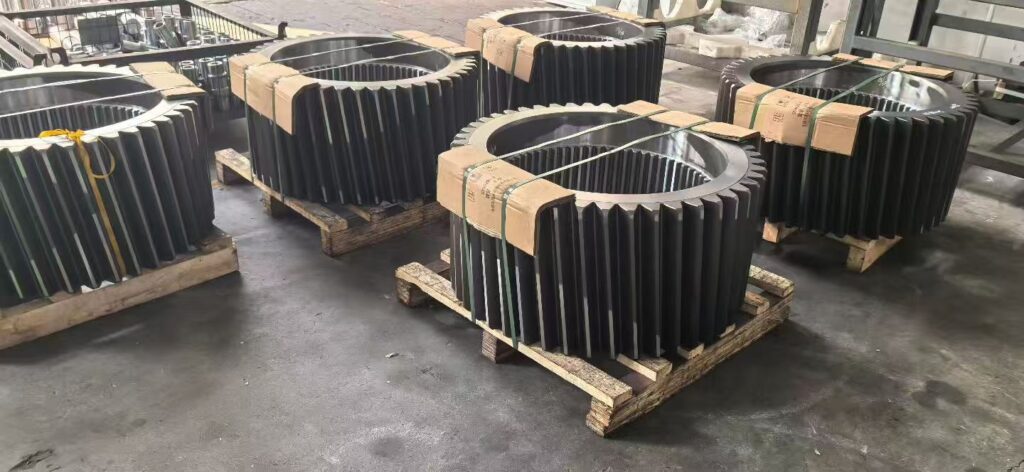
In scenarios where a shaft has an integrated large-diameter flange, a hybrid approach or a specialized closed-die process might be used if the volume is high enough. However, for most heavy industrial gears, open die forging followed by ring rolling or heavy machining remains the most flexible path.
6. Quality Assurance: NDT Testing and Standards
In the world of heavy duty forged steel shafts, a “good-looking” part is not enough. Internal integrity is everything.
ASTM A182/A336 Standards
Most industrial shafts are forged to ASTM A182 (forged valves and fittings) or ASTM A336 (steel forgings for pressure and high-temperature parts). These standards dictate the chemical composition, heat treatment protocols, and mechanical property requirements.
NDT Testing for Forged Shafts (UT/MT)
NDT testing for forged shafts is the final gatekeeper. Ultrasonic Testing (UT) according to standards like EN 10228-3 is mandatory.
- Open Die Advantage: Because the shape is simpler during the NDT stage, UT penetration is often more effective, allowing for the detection of minute internal inclusions or “hydrogen flakes.”
- Magnetic Particle Inspection (MT): This is used to detect surface and near-surface discontinuities that could act as stress risers during operation.
7. Conclusion & Decision Matrix
Choosing between these processes is a matter of scale, volume, and stress requirements. For the majority of “large-scale” applications, open die forging provides the necessary metallurgical superiorities and economic flexibility.
| Feature | Open Die Forging | Closed Die Forging |
| Max Weight | 200+ Tons | Typically < 5 Tons |
| Tooling Cost | Low / Minimal | Very High |
| Grain Flow | Excellent (Longitudinal) | Excellent (Contoured) |
| Precision | Rough (Requires Machining) | Near-Net Shape |
| Lead Time | Faster for prototypes | Slower (Die making time) |
| Best For | Custom, Large, Heavy Duty | Standardized, High Volume |
CTA: Are you designing a custom shaft for a high-stress application? Our engineering team specializes in large-scale forged shafts using premium alloys like 42CrMo4 and 34CrNiMo6. Contact us today for a technical consultation and project quote.
FAQ: Frequently Asked Questions
Q1: Which forging process provides the highest strength?
Both processes significantly improve strength over casting. However, for large shafts, open die forging often provides better center-soundness because the massive hydraulic presses can penetrate to the core of the large cross-sections, ensuring a fully refined grain structure.
Q2: How does the lead time compare between the two?
Open die forging typically has a shorter lead time for small batches because there is no need to design and sink custom die sets. Closed die forging can take 8-12 weeks just for tooling fabrication before production begins.
Q3: Why is 42CrMo4 so common in shaft forging?
42CrMo4 (AISI 4140 equivalent) offers an exceptional combination of fatigue strength and wear resistance. When forged, its response to quenching and tempering is highly predictable, making it ideal for the safety-critical shafts used in mining and power generation.
Q4: Is closed die forging cheaper for large shafts?
Only if the volume is extremely high (e.g., thousands of units). For “large-scale” shafts (over 2-3 meters), the cost of the dies and the size of the press required usually make closed die forging economically unfeasible compared to open die forging.
Q5: What NDT standards should I specify for a heavy-duty shaft?
At a minimum, specify UT (Ultrasonic Testing) per EN 10228-3 Class 3 or 4 and MT (Magnetic Particle Inspection) per EN 10228-1. This ensures the shaft is free of internal voids and surface cracks that could lead to catastrophic failure.
Metallurgy of Forged Stepped Shafts: Optimizing Heat Treatment and Hardness Gradient for Heavy-Duty Performance
In the engineering of high-capacity transmission systems—ranging from multi-megawatt wind turbine main shafts to heavy-duty…
Manufacturing Engineering of Forged Stepped Shafts: Optimizing Grain Flow for Heavy-Duty Transmission
In the design of high-torque transmission systems—ranging from industrial gear reducers(For complete gearbox assemblies, we…
Advanced Gear Blank Manufacturing: Why Seamless Forging Outperforms Casting for Heavy-Duty Power Transmission
In the demanding sectors of offshore wind energy, deep-pit mining, and maritime propulsion, the gear…
Seamless Rolled Ring Forging vs. Casting & Welding: The Ultimate Guide for Heavy Industry
In the demanding sectors of wind energy, aerospace, and heavy industrial manufacturing, the structural integrity…
Open Die Forging vs. Closed Die Forging for Large-Scale Forged Shafts: A Technical Comparison for Engineers
In the realm of heavy machinery, the structural integrity of a power-transmitting component is non-negotiable….
Forged Gear Rings: The Seamless Solution for High-Performance Gear Blanks
For procurement managers and engineers in the heavy machinery sector, the reliability of a gear…