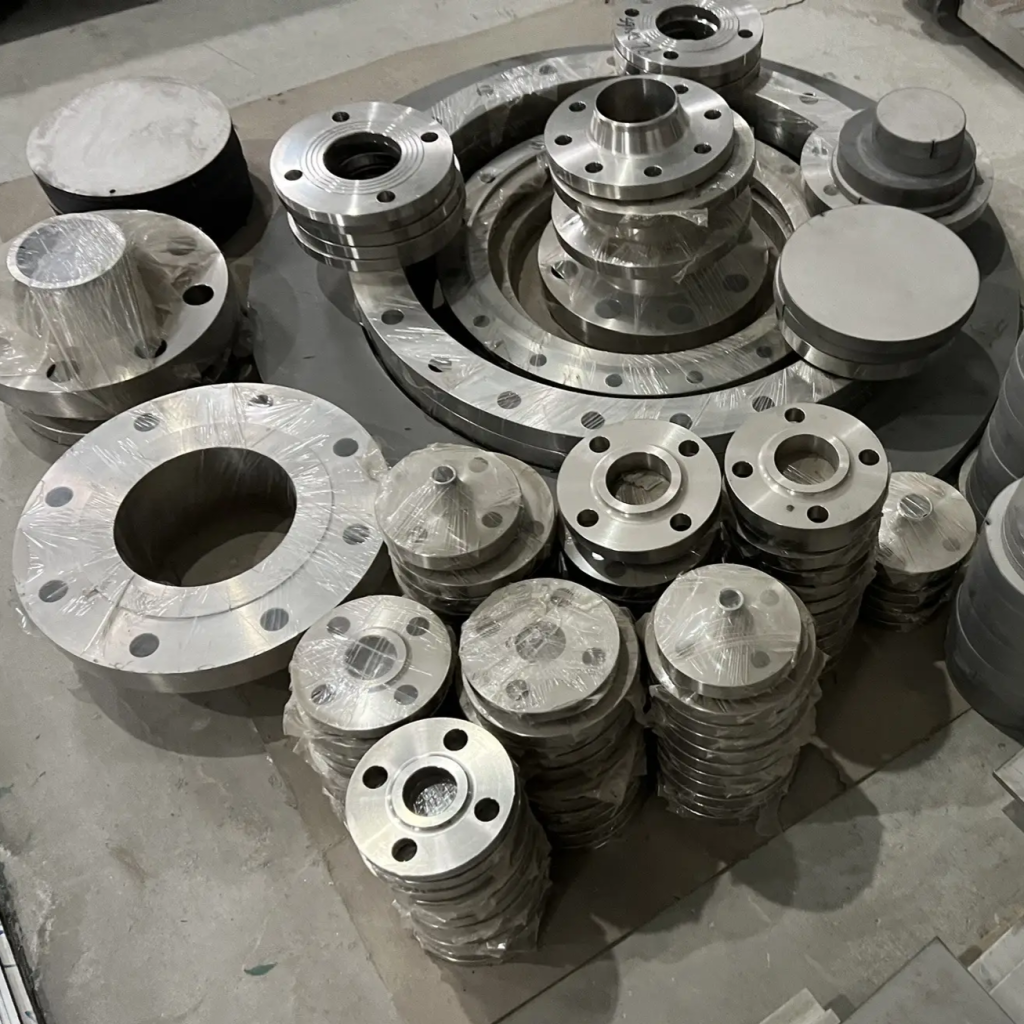
In the chemical industry, equipment often faces corrosive media, high temperatures, and high pressure environments. To ensure safety, durability, and reliability, titanium and its alloys have become an essential material. Among them, titanium forgings offer superior properties compared to cast or welded parts, making them the preferred choice for critical chemical equipment.
Why Choose Titanium Forgings for Chemical Applications?
- Outstanding Corrosion Resistance
Titanium exhibits excellent resistance against acids, alkalis, chlorine, and seawater, making it suitable for aggressive chemical environments. - High Strength-to-Weight Ratio
Titanium forgings combine high mechanical strength with light weight, reducing equipment stress and extending service life. - Excellent Heat Resistance
Titanium alloys maintain stability and performance at elevated temperatures, ensuring reliable operation in chemical reactors and heat exchangers. - Long Service Life & Safety
With superior fatigue strength and structural integrity, titanium forgings minimize downtime and enhance overall plant safety.
Common Applications of Titanium Forgings in Chemical Industry
- Heat Exchangers – Titanium tube sheets, flanges, and shells resist corrosion from aggressive fluids.
- Chemical Reactors & Pressure Vessels – Forged titanium rings and closures provide strength and resistance under high pressure.
- Pumps & Valves – Titanium forged parts improve durability in handling corrosive liquids.
- Pipeline Systems – Forged titanium flanges and fittings ensure leak-free, long-lasting connections.
Conclusion
Titanium forgings have become a key material in modern chemical industry equipment, offering unmatched corrosion resistance, strength, and durability. By selecting titanium forgings, chemical plants can achieve improved efficiency, reduced maintenance costs, and enhanced safety.