
Introduction:
In industries where failure is not an option—such as aerospace, medical implants, and subsea oil & gas—titanium is the material of choice. However, the raw material alone isn’t enough. To truly unlock the potential of this metal, it must undergo the titanium forging process.
Forging titanium is significantly more challenging than forging steel or aluminum due to its sensitivity to temperature and its narrow processing window. In this guide, we explore how the titanium forging process transforms raw billets into components with an unbeatable strength-to-weight ratio and corrosion resistance.
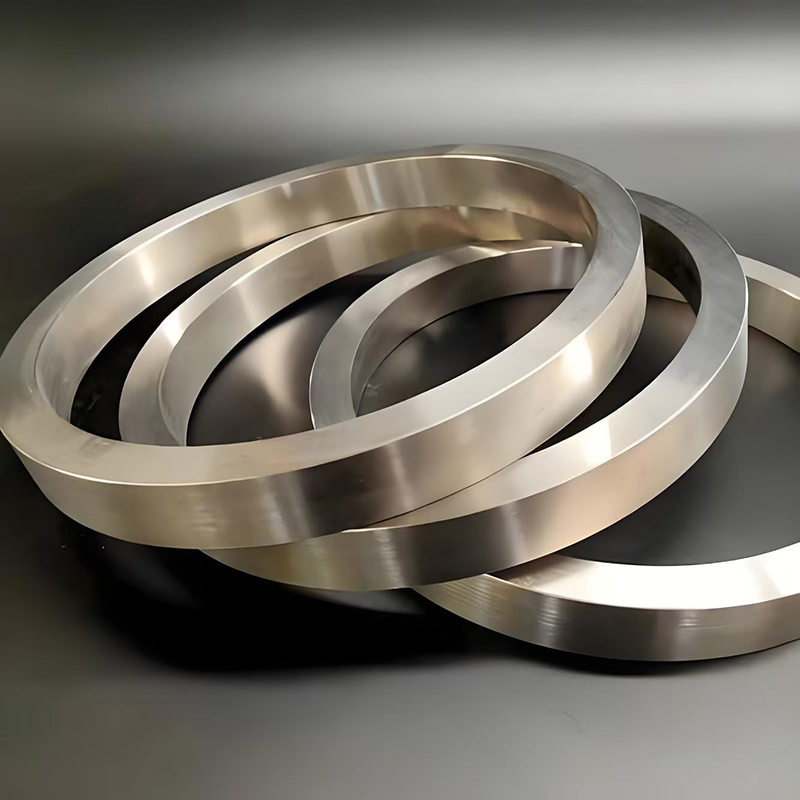
Why Forging is Critical for Titanium
While titanium can be machined or cast, forging offers superior metallurgical properties. The titanium forging process breaks down the coarse grain structure of the ingot and refines it.
- Result: A component with enhanced ductility, fatigue resistance, and impact toughness.
- Benefit: Forged parts are stronger and more reliable, which is why critical aircraft landing gear and jet engine blades are almost always forged.
Step-by-Step: The Titanium Forging Process Explained
Forging titanium requires precise control over heat and deformation rates. Here is the typical workflow:
1. Material Preparation & Heating
The process begins with a titanium billet (typically Ti-6Al-4V). Heating is the most critical step.
- Temperature Control: Titanium must be heated to a specific range (usually between 800°C and 950°C for Alpha-Beta alloys).
- The “Alpha Case” Challenge: At high temperatures, titanium becomes highly reactive with oxygen and nitrogen, forming a brittle surface layer known as “Alpha Case.” Manufacturers must use protective coatings or controlled atmosphere furnaces to minimize this.
2. Forging Operations
Once heated, the metal is moved quickly to the forge.
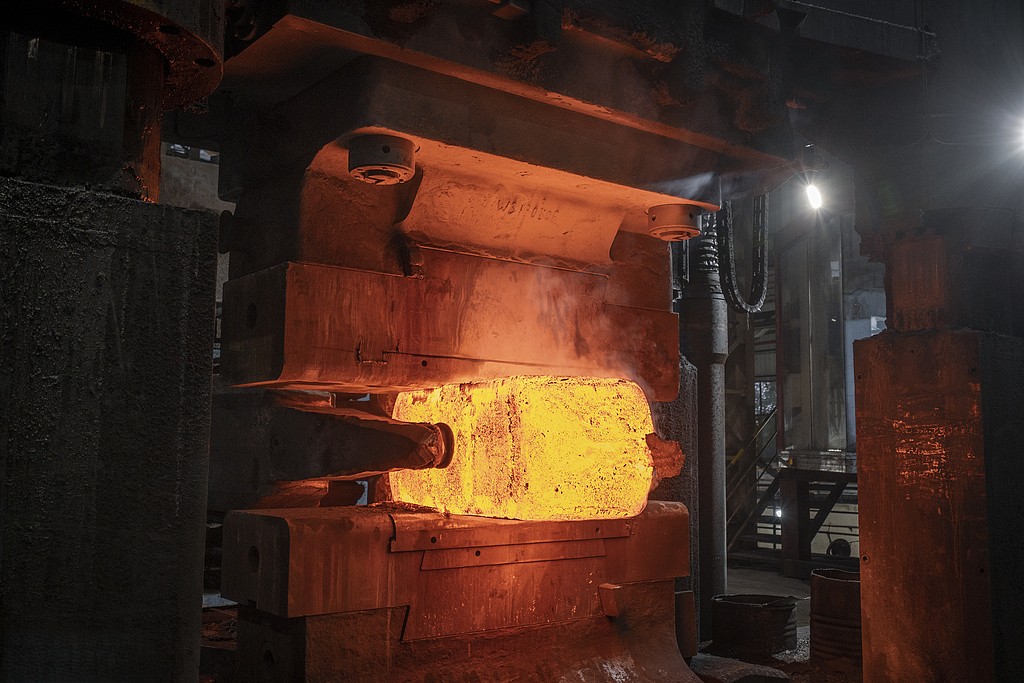
- Open Die Forging: Used for large titanium bars, discs, and rings. The metal is shaped between flat dies to improve internal structure.
- Closed Die Forging: Used for complex precision parts like turbine blades or medical hip stems. The metal is forced into a custom mold.
- Strain Rate Control: Titanium is strain-rate sensitive. The press speed must be carefully controlled to prevent internal cracking or overheating from friction.
3. Heat Treatment
After the mechanical shaping, the titanium forging process isn’t finished. The part undergoes heat treatment (Solution Treating and Aging – STA) to stabilize the microstructure and achieve the final desired hardness and tensile strength.
4. Machining and Finishing
Since titanium is difficult to machine, forgings are often made to “near-net shape” to minimize waste. The final step involves removing the brittle Alpha Case layer (via chemical milling or machining) and polishing the surface.
Common Titanium Alloys We Forge
Different applications require different alloys. The most common include:
- Ti-6Al-4V (Grade 5): The workhorse of the industry. It offers a perfect balance of strength, ductility, and weldability. Used in 80% of aerospace applications.
- Ti-6Al-2Sn-4Zr-2Mo (Ti-6242): Designed for high-temperature stability, often used in gas turbine engines.
- Grade 2 (Commercially Pure): Lower strength but excellent corrosion resistance, ideal for chemical processing equipment.
Key Applications of Forged Titanium
The unique output of the titanium forging process serves the most demanding sectors:
- Aerospace: Landing gear beams, engine discs, and structural frames.
- Marine & Subsea: Propeller shafts, ROV components, and valves resistant to saltwater corrosion.
- Medical: Artificial joints and surgical instruments.
- Industrial: Heat exchangers and high-pressure vessels in chemical plants.
Conclusion
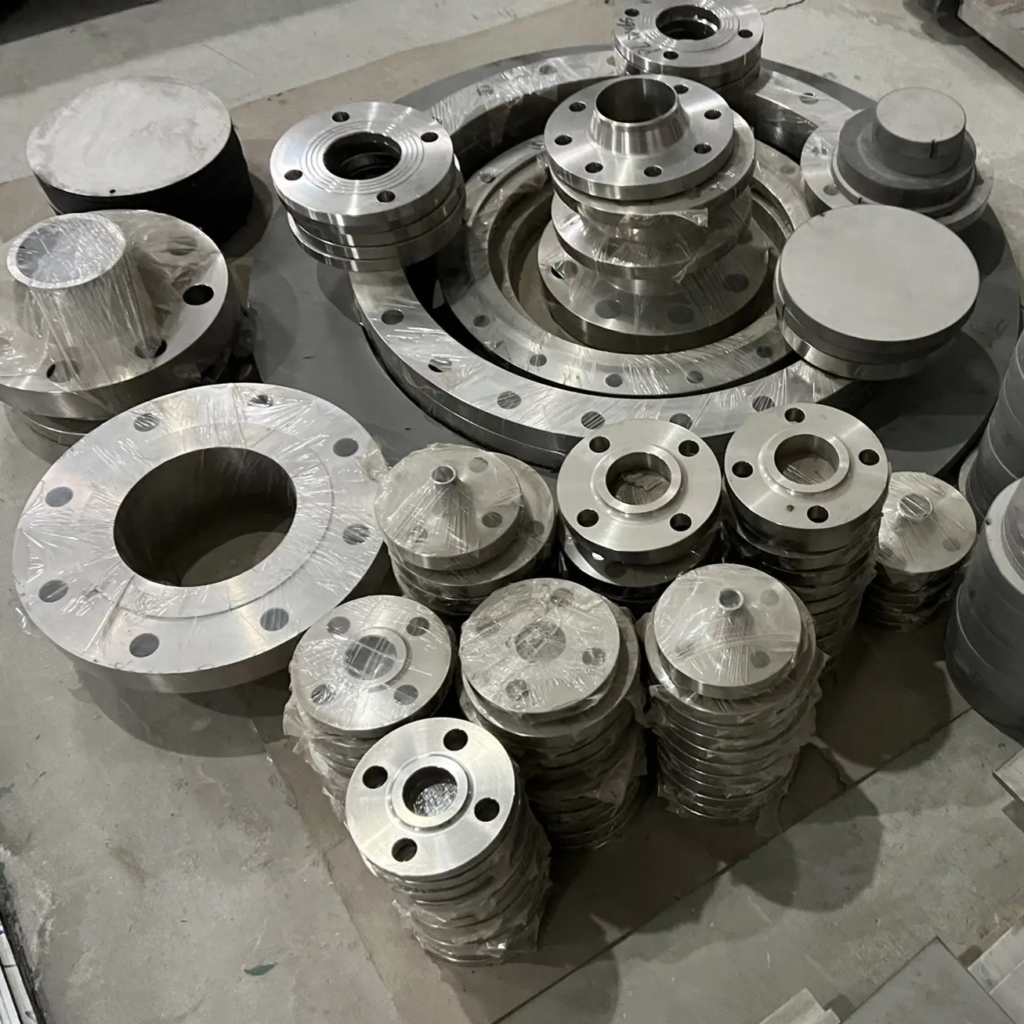
The titanium forging process is a blend of metallurgical science and manufacturing art. It requires specialized equipment and deep expertise to avoid defects like alpha case or grain growth.
When done correctly, it produces components that are lighter than steel yet equally strong. If you are looking for a supplier who understands the intricacies of forging titanium alloys, contact our engineering team today. We deliver precision, quality, and performance.
The Ultimate Guide to Forged Gear Materials for Heavy Industry
In heavy industrial applications—such as wind turbine gearboxes, mining excavators, and marine propulsion systems—gears are…
Custom Open Die Forging: The Ultimate Solution for Heavy Industrial Components
In the world of heavy manufacturing, off-the-shelf components rarely meet the rigorous demands of critical…
Seamless Rolled Ring Forging: The Ultimate Guide to Heavy Industrial Rings
In sectors like wind energy, aerospace, and heavy mining, component failure is catastrophic. When engineers…
Titanium Forging Temperature Guide: Controlling Heat for Large Rings & Open Die Components
In the manufacturing of high-performance components, titanium is unforgiving.[1][2] Unlike steel, which allows for a relatively wide…
The Gear Forging Process: Manufacturing Large Rings and Heavy Duty Blanks
Introduction:In the realm of heavy industry—whether it’s the main gearbox of a wind turbine or…
The Titanium Forging Process: A Complete Guide to High-Performance Components
Introduction:In industries where failure is not an option—such as aerospace, medical implants, and subsea oil…