**Meta Description**: Learn about the essential aspects and techniques involved in the manufacturing of forged flanges. Discover how each step contributes to the quality and performance of the final product.
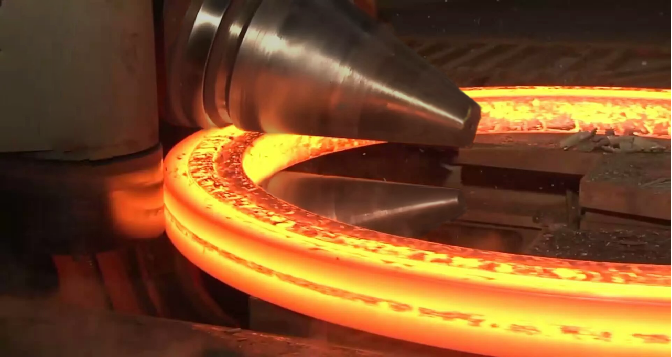
**Keywords**: forged flanges, manufacturing process, raw materials, forging techniques, heat treatment, quality control, finishing operations Forged flanges are crucial components in various industries, and understanding their manufacturing process is of utmost importance. The first step in forging flange production is the careful selection of raw materials. High-quality alloys or carbon steels are typically chosen based on the specific requirements of the flange’s application. The chemical composition and mechanical properties of the raw material must meet strict standards to ensure the flange’s durability and performance. For example, in applications where corrosion resistance is vital, stainless steel or nickel alloys might be selected. Once the raw materials are prepared, the forging process begins. There are different forging techniques, such as open die forging and closed die forging. Open die forging offers greater flexibility and is suitable for producing large, custom flanges. It involves hammering or pressing the heated billet between flat or simple-shaped dies to gradually shape it into the desired flange form. Closed die forging, on the other hand, uses precision-machined dies that closely match the final flange geometry. This technique allows for higher production rates and more accurate dimensions, making it ideal for mass-produced flanges. Heat treatment is another critical aspect. After forging, the flanges are often subjected to annealing, normalizing, or quenching and tempering processes. Annealing helps relieve internal stresses and improve the material’s machinability. Normalizing refines the grain structure and enhances the mechanical properties. Quenching and tempering can significantly increase the strength and toughness of the flange. For instance, a properly quenched and tempered carbon steel flange can have excellent tensile strength and impact resistance. Quality control is an integral part of the manufacturing process. Non-destructive testing methods like ultrasonic testing, magnetic particle inspection, and radiographic testing are employed to detect any internal or surface defects. Dimensional checks are also carried out to ensure that the flanges meet the specified tolerances. Only flanges that pass these stringent quality tests are deemed suitable for use. Finally, finishing operations such as machining the flange faces, drilling bolt holes, and applying surface coatings if required are carried out. Machining ensures a smooth and flat surface for proper sealing. Surface coatings like zinc plating or epoxy coatings can provide additional protection against corrosion or wear. In conclusion, the manufacturing process of forged flanges is a complex and precise operation. Each step, from raw material selection to finishing, plays a vital role in producing high-quality flanges that can withstand the rigors of various industrial applications. By adhering to strict manufacturing standards and continuously improving the process, manufacturers can ensure the reliability and performance of their forged flanges.