
In the world of heavy machinery and power transmission, the gear is the hforged gears.
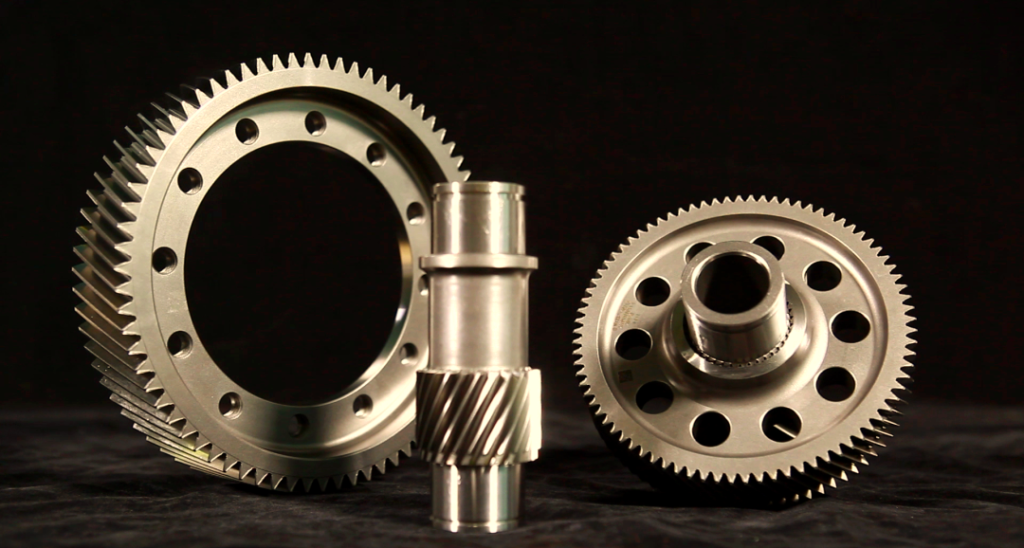
Why Choose Forged Gears? The Key Advantages
The primary reason to specify a forged gear over a cast
1. Continuous Grain Flow
This is the single biggest advantage. In a casting, the grain structure isforged gear, the grain flow is directional and follows the contour o
2. Elimination of Internal Defects
Castings often suffer from porosity, shrinkage, or cavities. Forging consolidates the material center
3. Cost-Effective for Mass Production
While the tooling cost for forging can
Best Material Selection for Gear Forging
Carburizing Steels (Case-Hardening)
These steels are low in carbon but contain alloy elem
- 18CrNiMo7-6 (1.6587): The gold standard for heavy-duty wind turbine and m
- 20CrMnTi: A cost-effective, widely used grade for automotive and
- SAE 8620: A common American standard alloy known f
Quenched and Tempered Steels (Through-Hardening)
These
- 42CrMo4 (AISI 4140): An incredibly versatile steel offering high strength and toughness. widely used for medium-sized gears and shafts.
- 34CrNiMo6 (AISI 4340): Used for components requiring high tensile strength and shock resistance.
(Need help choosing materials? Contact our [Engineering Team] for advice.)
The Gear Forging and Manufacturing Process
Manufacturing a high-precision forged gear is a multi-step process that demands strict quality control.
- Cutting & Heating: The steel billet is cut to weight and heated to forging temperature (typically 1100°C – 1200°C).
- Forging (Upsetting & Piercing): The hot metal is placed in a die and hammered or pressed. For ring gears, a ring rolling machine expands the diameter while reducing the thickness.
- Heat Treatment (Normalizing): The forged blank is normalized to refine the grain structure and improve machinability.
- Rough Machining: Excess material is removed to approach the final dimensions.
- Gear Cutting & Finishing: Teeth are cut using hobbing or shaping processes, followed by heat treatment (carburizing) and precision grinding to achieve DIN/AGMA quality standards.
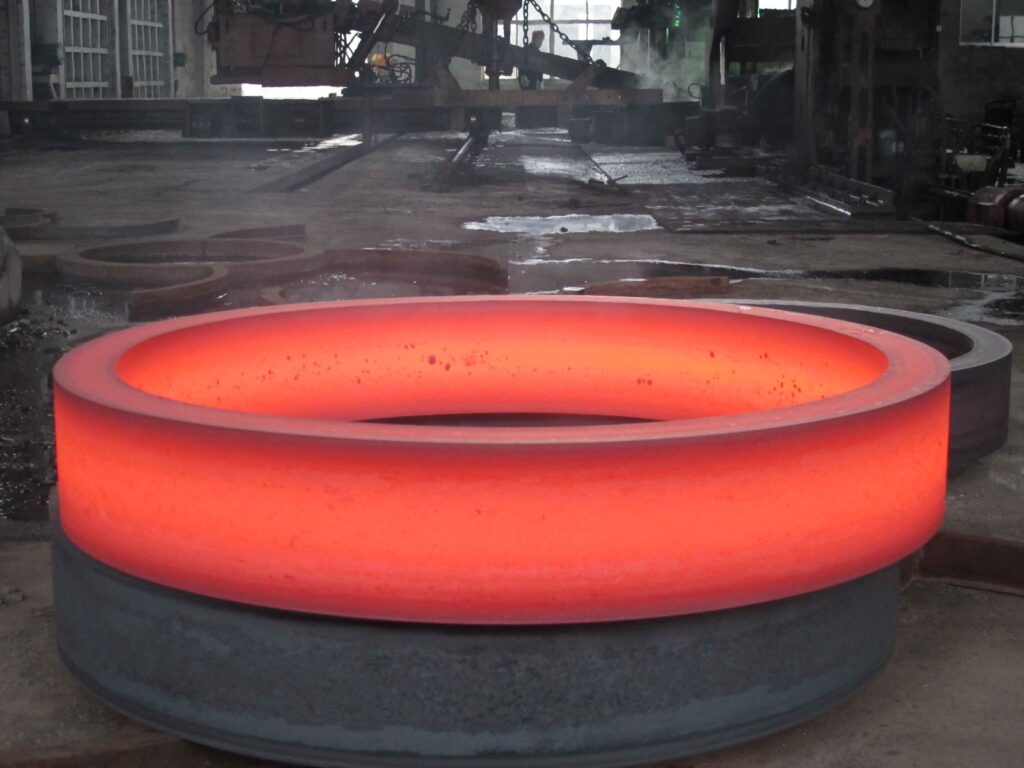
Industrial Applications of Forged Gears
Because of their durability, forged gears are the standard in industries where equipment downtime is expensive.
- Wind Energy: Main gearbox planetary gears and yaw drives that must last for 20 years.
- Mining & Excavation: Drive gears for crushers, excavators, and conveyor systems facing extreme shock loads.
- Marine & Offshore: Propulsion reduction gears and winch systems.
- Automotive & Rail: Transmission gears and locomotive traction drives.
Conclusion
Forged gears represent the pinnacle of mechanical power transmission components. By leveraging the benefits of directional grain flow and premium alloy steels like 18CrNiMo7-6, manufacturers can ensure their machinery runs smoother and lasts longer.
As a leading manufacturer of custom forged components, we are dedicated to delivering precision and quality. If you are looking for a reliable partner for your next gear project, reach out to us today.