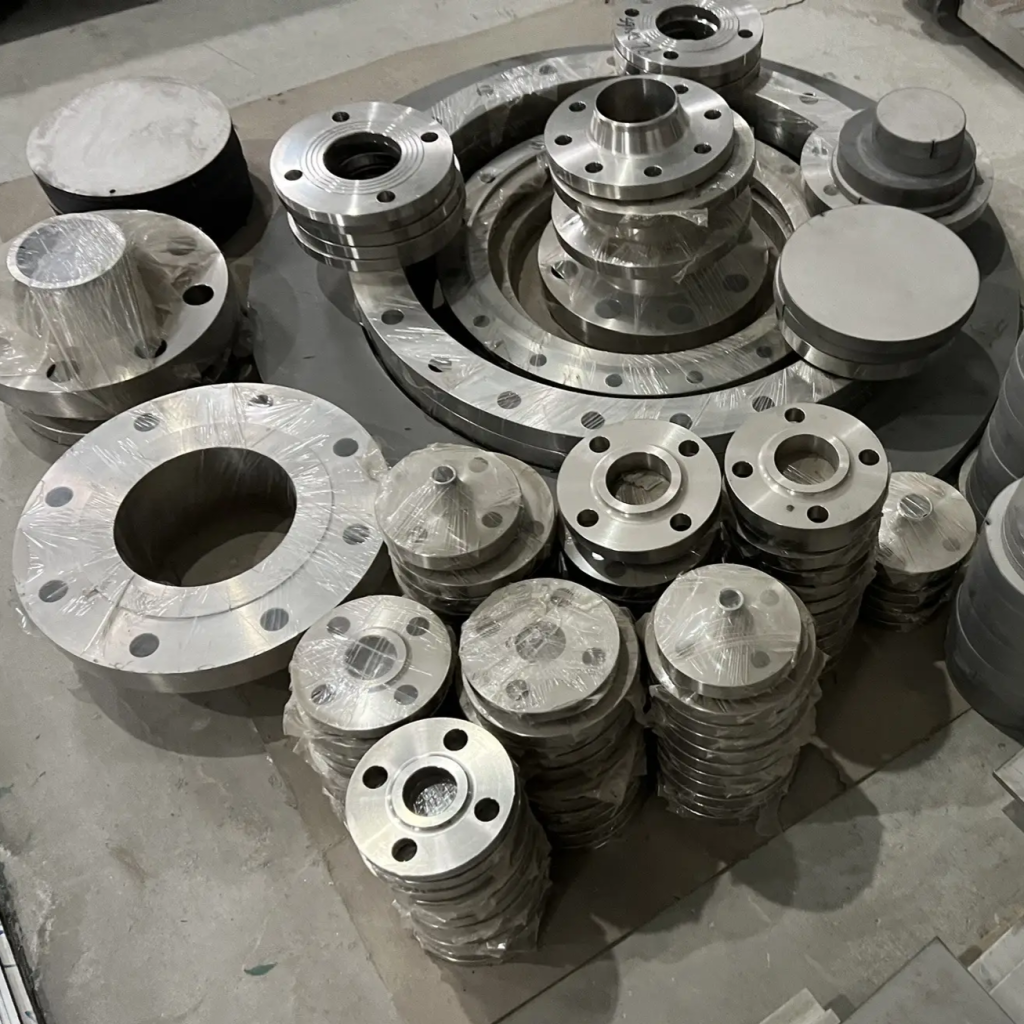
**Meta Description**: Gain insights into the distinctions between titanium flanges and stainless steel flanges, understanding their respective advantages and ideal application contexts within the realm of flange usage.
**Keywords**: titanium flanges, stainless steel flanges, application comparison, corrosion resistance, strength, temperature tolerance, cost factors In the world of flange applications, both titanium flanges and stainless steel flanges have carved out significant roles. Understanding their differences and optimal uses is crucial for making informed decisions in various industries.
**Corrosion Resistance**: Titanium flanges possess outstanding corrosion resistance. They can withstand highly corrosive environments, such as those containing strong acids like hydrochloric acid and sulfuric acid, as well as saltwater and oxidizing agents. This makes them a top choice for applications in the chemical processing industry, especially in plants dealing with aggressive chemicals. In contrast, stainless steel flanges offer good corrosion resistance but may not be as effective in extremely harsh corrosive conditions. For example, in a coastal chemical plant where the air is laden with salt particles, titanium flanges would likely have a longer service life and require less maintenance compared to stainless steel flanges.
**Strength and Weight**: Titanium is renowned for its high strength-to-weight ratio. Titanium flanges are lightweight yet strong, which is beneficial in applications where weight reduction is important, such as in the aerospace and some high-tech industries. They can handle significant pressure and stress while minimizing the load on the overall structure. Stainless steel flanges, on the other hand, are relatively heavier but still offer substantial strength. In heavy industrial settings like power plants and large-scale manufacturing facilities where the weight of the flange may not be a critical factor, stainless steel flanges can provide reliable performance.
**Temperature Tolerance**: Titanium flanges have excellent temperature tolerance, being able to endure both high and low temperatures without significant loss of mechanical properties. This makes them suitable for applications in industries like cryogenics and high-temperature chemical reactions. Stainless steel flanges also have a decent temperature range, but they may not perform as well at extremely high or low temperatures. For instance, in a cryogenic storage facility, titanium flanges would be more reliable in maintaining a tight seal and structural integrity compared to stainless steel flanges.
**Cost Factors**: Stainless steel flanges are generally more cost-effective compared to titanium flanges. The raw material cost and manufacturing processes for stainless steel are often less expensive. This makes stainless steel flanges a popular choice for a wide range of applications where the performance requirements can be met without the need for the superior properties of titanium. However, in applications where the long-term durability and performance of titanium flanges justify the higher initial cost, such as in critical chemical or aerospace applications, the investment in titanium flanges can prove to be a wise decision in the long run. In conclusion, the choice between titanium flanges and stainless steel flanges depends on a variety of factors including the specific application requirements, environmental conditions, and cost considerations. By carefully evaluating these aspects, engineers and industry professionals can select the most appropriate flange type to ensure the safety, efficiency, and longevity of their systems.